Spring is a season of growth. It’s the perfect time to sharpen academic skills that will carry you through the rest of the school year and beyond. One of the most valuable (and often underestimated) skills you can develop is reading comprehension. Read on for our best tips to develop your reading comprehension skills this season.
The Hard Facts
Like anything, reading comprehension is a skill that takes both time and effort to develop. We read every day—whether that be in a book, on our phones, signs, etc.—and may, therefore, believe it’s a skill we’re already practicing. But the truth is, there’s more to comprehension than simply reading the words on the page.
If you want to improve your comprehension, retention, and speed, there are many strategies available to you—as long as you’re willing to do the work.
The Good News
Also, like anything, skills strengthen with practice. Natural affinity or not, once we build our cognitive muscles, the skills become muscle memory. Options’ writing coaches are looking forward to supporting you through this learning process!
Strategies
- Before Reading
- Work the title: titles often emphasize key themes of texts, so spend time thinking about their meanings before reading
- Get to know the author: oftentimes, authors are inspired by their cultural or historical experiences; researching their personal background, beliefs, etc. can give readers a solid background to go into reading with.
- Make predictions: using the title, images, and what you know about the author, predict what you think will happen in the text and write it down.
- Write questions about your predictions: what are you wondering about? What is the story structure? What is the text’s purpose? etc.
- K-W-L charts: (see example below).
- While Reading
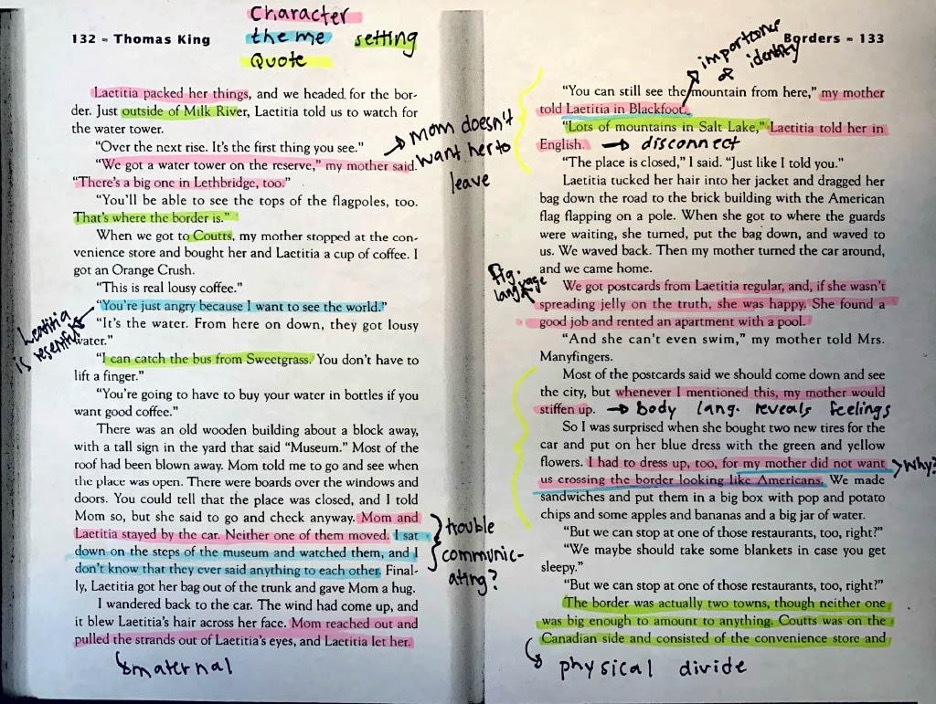
- Annotate:
- Use different coloured highlighters or shaped markers to differentiate text features (see Annotation Bookmark and example below).
- Write questions as you read.
- Make personal connections: piggybacking off of pre-existing neural pathways helps commit new information to long-term memory more efficiently! Write your personal connections to text features in the margins or on a notes page.
- Look up new words and define them: reading builds vocabulary, and vocabulary builds comprehension. We can only comprehend what we understand.
- Annotate:
- After Reading
- Present the information visually: Draw a storyboard (stories), create a flow chart, or connect ideas using a Venn Diagram.
- Practice summarizing: Create an essay outline for the text (academic texts) or turn each paragraph/page into 1-3 sentences of condensed information.
- Compare characters or situations from the beginning to the end of the text: tracking character arcs/how conflict is resolved helps identify theme; how do they change? What causes this change? What conflict do they face? How is it resolved (for good or bad)? What do these things suggest about what the author has to say about being human?
- Answer questions: Answer the questions you jotted down before reading. Additionally, try searching online to see if there are questions available for you to push further into.
Examples
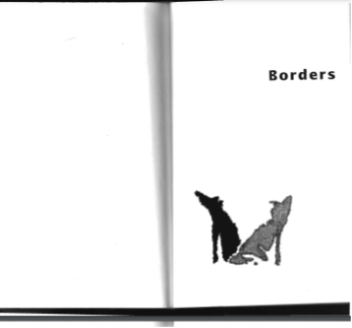
Pre-work: “Borders” by Thomas King
- About the author: American-born Canadian author known for his work as an Indigenous author; writes about the North American Indigenous experience.
- Title itself: Knowing what I do about the author, I interpret this title as having something to do with geographical borders, likely those between America and Canada.
- Accompanying image: the two wolves that contrast each other in both colour and the way they are facing seem to suggest opposing views and disconnection. They howl, suggesting concern.
- Predictions: I predict that this short story will concern the disconnection that geographically imposed borders create for Indigenous people.
K-W-L Chart for text:
| KNOW (what do you already know on this topic?) | WONDER (what do you wonder about this topic?) | LEARNED (After reading, write what you learned) |
| Thomas King in a Canadian-American Indigenous author. King often writes about the Indigenous experience | What border is being discussed? Does it have metaphorical meaning? Is this from King’s own experience? | The border was between Canada and America and does seemingly symbolize not only physical distance but also how Western ideology is enforced on Indigenous people |
Annotated excerpt of text:
Storyboard/summary of text:
| Exposition | Rising Action | Climax | Falling Action | Resolution |
| Describe life at character’s home Explains sister Laetitia has moved to Salt Lake | Introduce trip to visit Laetitia and the tension between family members Drive to the border and refuse to answer to Canadian/ American citizenship | Car is held, mom refuses to answer question/ news arrives | They are allowed to move on They visit Laetitia in Salt Lake and discuss identity/home | They go back home and Laetitia thinks about moving back home |
Comprehension questions: I wrote these before I read and answered after I read
- What border is being discussed?
- The border between Canada and America.
- How does it affect the characters?
- It separates them and causes them to address issues of identity, belonging, and self-determination.
- What will cause conflict in this story?
- Person vs Person: the mom and daughter struggling with their relationship.
- Person vs Society: the mom and the border guard who will not let her through according to North American law.
- How will it be resolved?
- Once attention is drawn to the situation by the news crews, the dispute is elevated and their passing is approved. One infers that this was due to it causing bad press for the respective states.
- What is the theme of the story?
- The story mostly concerns identity. The mother refuses to conform to the border guards’ beliefs about her identity, and though it causes them trouble, she does not budge on this. The characters, in fact, do not change from the beginning to the end of the story. The conflict is resolved through both this determination and elevated coverage of indigenous land rights.
- Therefore, the story suggests that to be unwavering in one’s beliefs and identity, especially in a non-violent but unwavering manner, is more important than external forces and that belonging comes from within.
- What do I think happened after this story?
- I imagine that both the narrator and Laetitia respected their mother’s resolve and that it helped strengthen their own identities and understanding of Indigenous land rights and identity.
- I imagine that Laetitia moved home, inspired by this acceptance of herself and her family.
- How did the author use language to convey mood?
- The dialogue in the text is very short, suggesting both the reserved nature of the characters and their strength, finding it unnecessary to further explain their choices and beliefs.
Reading comprehension doesn’t have to be daunting—especially when you have the right tools and support. With focused strategies and consistent practice, your ability to understand, retain, and respond to what you read will grow stronger over time. Ready to take the next step? Book a session with one of our writing coaches to dive into reading comprehension strategies and start building skills that will last a lifetime.