For students who love reorganizing and decorating their bedrooms or doodling on every blank surface, studying interior design can be not only a fun option, but one that could lead to a career in the field of interior design, or even architecture, urban planning, environmental sciences, real estate, and others.
A 4-year CIDA-accredited bachelor’s degree program in interior design typically includes these main components:
- Communication: learning how to visually communicate design through both hand-drawn and digital platforms
- Studio Component: hands-on practice and training in professionally equipped studios, working with form, material, and colour, and the principles of design
- Academic Study: including a focus on the history of art and design, writing and communication, and building critical thinking and analytical skills
- Interior Design Projects: working on real-life projects, learning to design for residential, office, institutional, local, and global spaces
- Technology: learning about residential and commercial construction, building codes, and integrated building systems through professional-related elective courses
- Professional Practice: learning about the business side of the practice through internships and practical work experiences
There are only a handful of bachelor degree programs designed for students newly graduated from high school, including Kwantlen Polytechnic University’s Bachelor of Interior Design (with honours option now available); Vancouver Island University’s Bachelor of Interior Design; Ontario College of Art and Design University’s Bachelor of Design with Specialization in Interior Design; and Toronto Metropolitan University’s BFA Interior Design with co-op option.

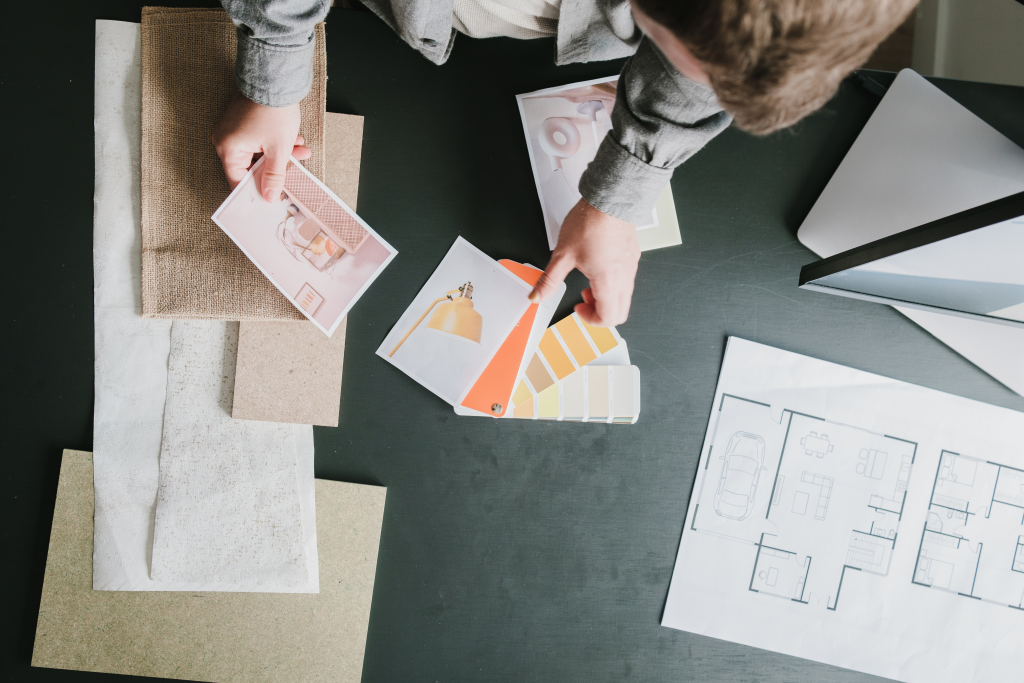
In addition to academic requirements (typically English 12 + 4 other academic 12 courses), these programs require supplements such as resumes, personal essays, videos and interviews, and portfolios. During high school art courses and extra-curricular courses, projects, and activities, interested students should start to gather samples of their artistic work and spend time reflecting on their design and artistic practice. It is a great idea to compile the following kinds of items in preparation for your design portfolio:
- Photographs of interior spaces you are drawn toward, describing why they are interesting
- Black and white as well as colour drawings, images, and illustrations using different forms of media
- Collages or mixed-media pieces
- Original 3-D artwork, such as sculpture and pottery (photos of these)
- Traditional and digital photography
- Graphic Arts
- Photos of various crafts such as quilting, textiles, fashion design, jewelry design
For a more detailed description of the key components of the portfolio, check out Ontario College of Art and Design’s recommendations here.
Our consultants are here to help you navigate the different programs and requirements and help you achieve your design dreams. Contact us today to schedule an appointment!